
Organic fertilizer granulation machines
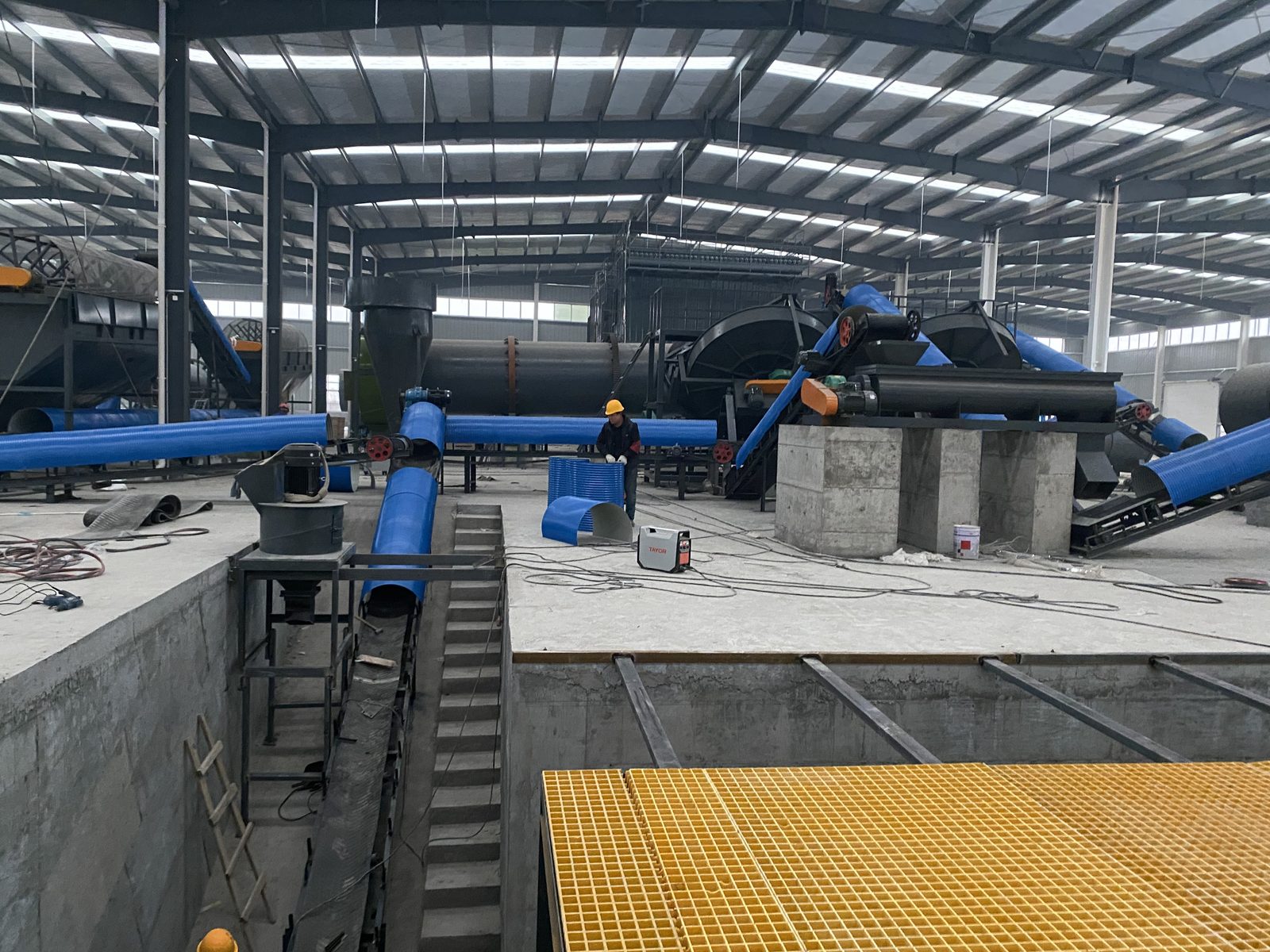
Granulators are usually chosen from a catalogue of capacities. That is the wrong order: the machine has to suit the material's plasticity, the binder
| Route | How it works | Best for | Watch out for |
|---|---|---|---|
| Disc (pan) granulator | Rotating inclined disc builds granules layer by layer | Organic powder with a binder; simple, visible, easy to adjust | Footprint and dust; requires steady feed moisture |
| Rotary drum granulator | Material tumbles in a rotating drum with spray | Higher capacities, blends with mineral additions | Longer residence, more recycle, sensitive to moisture |
| Stirring-tooth granulator | High-speed rotor forms granules with less binder | Organic material with fibrous structure | Wear parts, power demand, sensitivity to contamination |
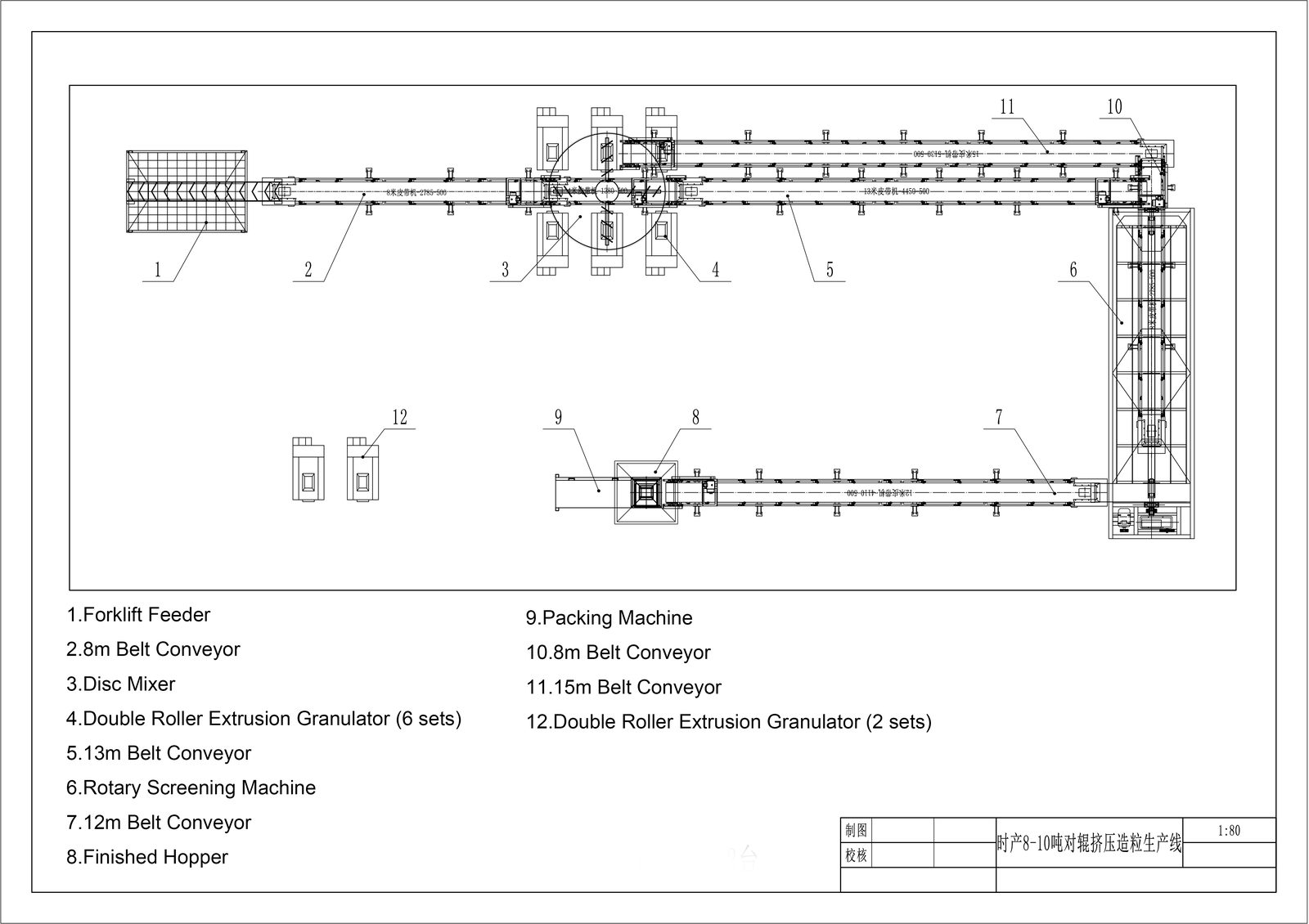
| Double-roller extrusion | Material is extruded through dies at low moisture | Dry, mineral-containing and heat-sensitive formulations | Sheet quality, die wear, limited to specific formulations |
| Flat-die pellet mill | Material pressed through a flat die | Fibrous organic material, animal bedding type products | Die and roller wear; throughput falls with moisture |
Water is added during granulation to give the material plasticity. That water must then be removed in the dryer, and it is the single biggest driver of drying energy. A plant that granulates at 30% moisture and dries to 13% evaporates about 200 kg of water per tonne of product; at 24% inlet it evaporates around 130 kg. The difference shows up directly in fuel consumption, dryer size and running cost.
Binder selection is the lever. Organic binders such as starch, molasses, lignosulfonate or clay minerals can achieve strong granules with less water than plain water addition. The design basis states the binder, its addition rate and its effect on the declared analysis of the product — because a binder that adds 3% of a mineral also changes what the label says.
| Parameter | Typical target | How it is checked | If it fails |
|---|---|---|---|
| Size distribution | 80% within 2–4 mm | Sieve set, sample per shift | Adjust granulator speed, angle, binder or recycle ratio |
| Crushing strength | 8–15 N per granule | Manual granule strength tester | Increase binder, reduce drying rate, review feedstock |
| Moisture | 12–14% after cooling | Oven or moisture meter | Adjust dryer temperature and residence time |
| Abrasion / fines | < 5% fines after handling | Sample after bagging, sieve | Increase cooler retention, reduce drop heights, review coating |
| Bulk density | consistent within ±5% | Measure per batch | Check feedstock blend and granulator settings |
Send the cured material moisture, the target granule size and your fuel options; we return the granulation route, dryer sizing and utility demand.
Disc granulators dominate for organic powder because they are visible, adjustable and tolerant of variation; drum granulators suit higher capacities and blended formulations; extrusion suits low-moisture and mineral-containing recipes.
Roughly 30–60 kg of standard coal equivalent, or its gas or biomass equivalent, per tonne of product, depending on inlet and outlet moisture. The figure is calculated in the mass and energy balance rather than estimated from experience.
Often, yes. Organic material alone frequently forms weak granules. Starch, molasses, lignosulfonate or clay binders improve strength and reduce the water that has to be evaporated.
Yes. The shared sections are grinding, screening and bagging; the granular route adds granulation, drying, cooling and coating. Plants usually run one route at a time, changing over between campaigns.
Tell us the feedstock, the daily tonnage and the product you want to sell. The engineering team replies with the plant configuration, the equipment scope and the information we still need before layout drawings start.
Prefer to talk first? WhatsApp +86 182 0399 3035 or email [email protected].
Two or three details are enough to start — the engineering team will come back with the configuration and the missing design basis.